All I Want for Christmas Is a Customer
The Gift That Keeps Giving—And the Customers Who Keep Coming Back

Looking for customers is nothing new in the sewing, quilting, embroidery, and crafting industries. In fact, finding customers, keeping customers, and convincing those customers to return has challenged independent retailers for as long as there have been independent retailers.
But there is no time of year when the competition for a customer’s hard-earned money becomes more intense than during the holiday season.
Think about it. We’re competing for the same discretionary dollars being pursued by automobile dealers, electronics retailers, appliance stores, online marketplaces, and virtually every other business offering something that might find its way beneath a Christmas tree.
And unlike many of those industries, most independent sewing, quilting, embroidery, and crafting retailers don’t have enormous advertising budgets or seemingly bottomless cooperative advertising funds.
We must make every dollar count.
But after fifty years of owning, operating, and consulting with businesses in our industry, I’ve come to believe something even more important.
We must make every CUSTOMER count!
Because the greatest opportunity for growth in most independent retail businesses isn’t necessarily waiting somewhere outside the front door.
It’s already inside the business.
It’s sitting in your customer database, attending your classes, visiting your website, asking questions, and occasionally wondering whether anyone remembers their name.
And sometimes, that opportunity is sitting at a sewing machine at 10:47 PM, needing help from a store that closed hours ago.
Advertising and Marketing Are NOT the Same Thing!
One of the biggest misconceptions I’ve encountered throughout my retail career is the belief that advertising and marketing are interchangeable.
They’re not.
Advertising is simply one form of marketing. And depending on how it’s used, it can be one of the most expensive.
Marketing is everything you do that influences how customers perceive your business.
It’s the greeting they receive when they walk through your door.
It’s the way your employees answer the telephone.
It’s the knowledge your team demonstrates when someone asks which stabilizer to use, which needle works best with a particular thread, or how much fabric is needed for a quilt.
It’s the follow-up telephone call after someone purchases a new sewing machine.
And perhaps most importantly, it’s how customers feel when they leave your business.
Advertising may convince someone to visit your store. Marketing determines whether they ever want to come back.
Unfortunately, too many retailers spend enormous amounts of time and money trying to attract people they’ve never met while overlooking the tremendous opportunities represented by the customers they already have.
I’ve made that mistake myself.
I remember attending seminars where marketing experts explained exactly what percentage of our gross sales should automatically be allocated to advertising.
Some of those experts had impressive credentials. They could quote statistics, produce colorful charts, and explain advertising formulas with remarkable confidence.
But I often wondered how many had ever personally worried about making payroll on Friday.
Or paying the rent.
Or watching a beautiful Saturday morning pass without enough customers coming through the door.
There’s a considerable difference between studying retailing and living it.
Take it from someone who has done both.
Spending MORE money on advertising does not guarantee MORE customers or MORE sales. It only guarantees that you’ve spent MORE money!
Now, don’t misunderstand me. I’m certainly not opposed to advertising.
I simply believe we should first make certain we’re doing everything possible to maximize the opportunities already available to us.
And that begins with our existing customers.
Want to Improve Your Business? Ask Your Customers!
Here’s an inexpensive marketing exercise that can produce remarkable results.
Ask a few of your customers what they like LEAST about doing business with you.
Not what they like most.
What they like least.
Then listen.
Really listen.
You might discover that your class schedule doesn’t accommodate working customers.
Perhaps your employees aren’t always available when someone needs help.
Maybe your customers have difficulty finding information on your website.
Or perhaps they simply wish someone would follow up after they make an important purchase.
Whatever you discover, you’ve just received something potentially more valuable than an expensive advertising campaign.
You’ve received information directly from the people whose opinions matter most.
Your customers.
And if you’re willing to act on what they tell you, you’ve taken an important step toward building a stronger business.
The Most Powerful Marketing Tool May Be a Simple Thank-You
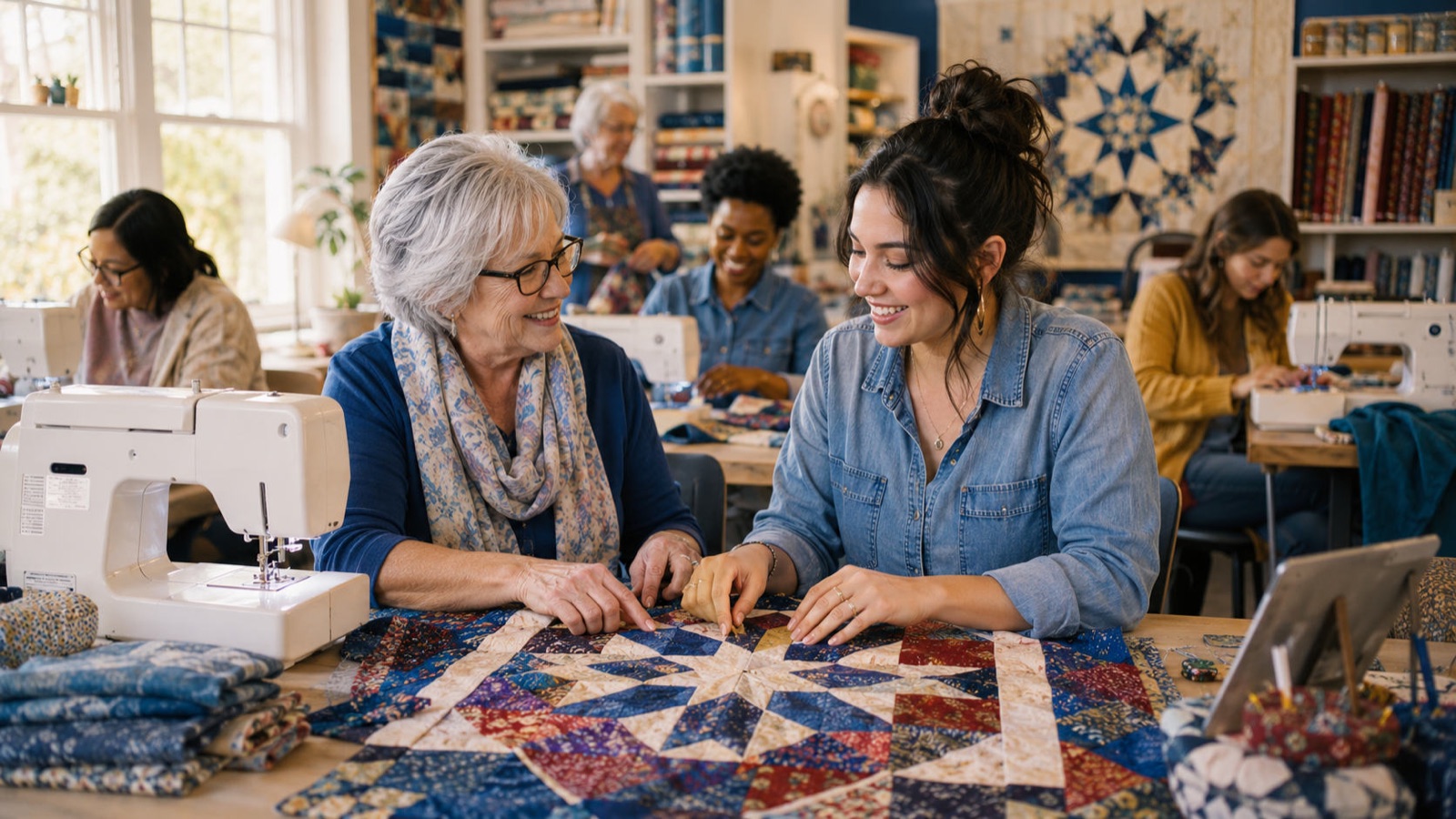
Think about the last time you purchased something significant.
Did the business follow up?
Did anyone call to thank you?
Did someone ask whether you were enjoying your purchase or needed assistance?
Now imagine a customer who has just purchased a new sewing machine from your store.
A few days later, someone calls.
Not to sell anything.
Not to promote another product.
Simply to say, “Thank you for trusting us with your purchase. How are you enjoying your new machine? Is there anything we can help you with?”
What do you suppose that customer thinks about your business?
More importantly, what might that customer tell a friend who’s considering purchasing a sewing machine?
That simple telephone call is MARKETING!
And some of the most effective marketing you’ll ever do.
Of course, there’s a problem.
We’re busy.
We’re helping customers, teaching classes, receiving merchandise, paying bills, scheduling employees, and trying to remember everything that needs to be done before closing.
It’s easy for those important follow-up calls to be forgotten.
That’s one reason I’m so enthusiastic about the Customer Relationship Management tools now available to independent retailers.
A good CRM system does much more than store names, addresses, and telephone numbers.
It helps you remember the PEOPLE behind those names.
With Sew Smart’s Dealer Operating System, retailers can organize customer information, manage relationships, and establish reminders for important follow-ups.
Imagine having a system that helps your team remember to contact a customer after a purchase, follow up on a class inquiry, or reconnect with someone who hasn’t visited in a while.
The technology doesn’t replace the relationship.
It helps you remember to nurture it.
And that distinction is enormously important.
Your Business Shouldn’t Depend on Who Happens to Be Working Today
Have you ever visited a national restaurant chain and noticed how much effort goes into making the customer experience consistent?
The menu is familiar. The procedures are standardized. Employees are trained to perform their responsibilities according to established expectations.
Successful companies don’t leave the customer experience entirely to chance.
Why should we?
Every independent retailer should have clearly defined standards for greeting customers, answering telephones, handling complaints, following up on purchases, and providing assistance.
And those standards should apply whether the owner is standing behind the counter or enjoying a much-deserved vacation.
Years ago, achieving that consistency required regular employee meetings, printed manuals, training sessions, and constant supervision.
Those things are still important.
But today, technology can make the process considerably easier.
For example, Sew Smart’s team-training and knowledge-management capabilities allow retailers to organize their store policies, procedures, and training materials so employees can access them when needed.
Retailers can also review which employees have opened assigned standard operating procedures.
Think about the value of that information.
Instead of assuming everyone has reviewed an important policy, you can identify where additional coaching or training may be needed.
Of course, simply opening a document doesn’t guarantee someone understands it. That’s why leadership, accountability, and personal training remain essential.
But now you have another tool to help build a more knowledgeable, consistent, and confident team.
Your customers should receive the same exceptional service every day—not just on the days when your best employee happens to be working.
What Does Your Customer Think When the Telephone Rings?
Marketing ultimately comes down to perception.
And effective marketing is anything you do that positively influences how customers perceive your business.
Consider the telephone.
A customer calls your store with a question.
Perhaps every employee is already helping someone. Maybe there’s a class taking place, a delivery arriving, or a customer waiting at the register.
The person calling doesn’t know any of that.
Nor should they have to.
They only know whether the person answering sounds friendly, knowledgeable, patient, and genuinely interested in helping.
Or whether they sound annoyed at being interrupted.
That single interaction may determine whether the caller becomes a lifelong customer—or decides to shop somewhere else.
And remember, the person calling might be the customer whose purchase helps pay your rent this month!
For decades, I taught employees that every telephone call represented an opportunity to create a relationship.
I still believe that.
But something has changed dramatically since I originally wrote this article.
Today, many customers don’t call.
They search.
They visit websites.
They ask questions online.
And they often do it long after our stores have closed.
Which brings me to a customer I want you to think about.
It’s 10:47 PM. Do You Know Where Your Next Customer Is?
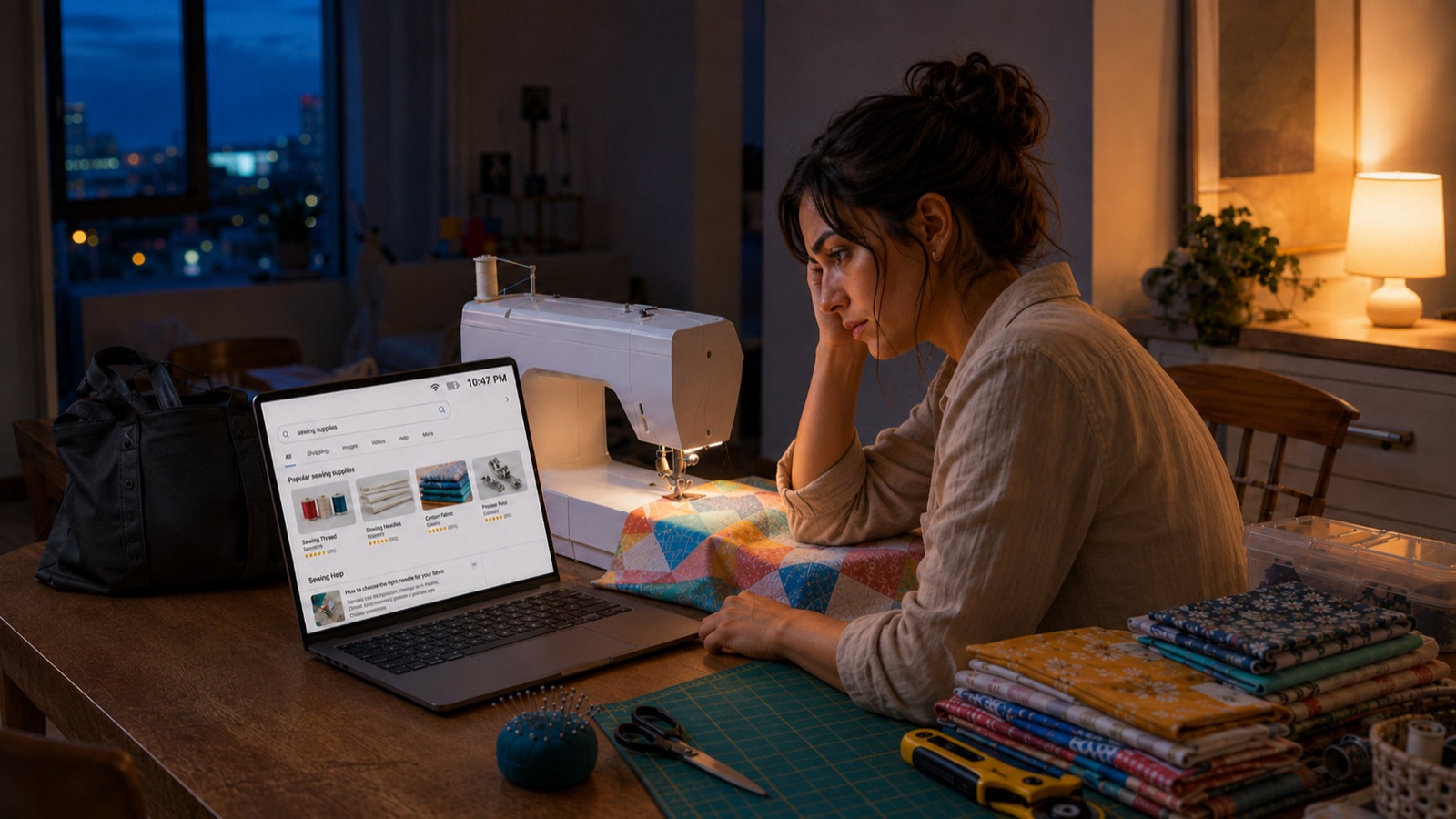
Imagine a young woman sitting at her sewing machine.
She has a full-time job, a family, and a limited amount of time to enjoy her favorite hobby.
Tonight, she’s finally found a few quiet moments to work on a project.
But something isn’t right.
Her thread keeps breaking.
She isn’t sure which needle she should be using.
And the stabilizer she purchased doesn’t seem to be producing the results she expected.
She needs help.
Unfortunately, it’s 10:47 PM.
Your store closed hours ago.
So what does she do?
She searches the internet.
She watches videos.
She visits websites.
She asks questions of people who may or may not know what they’re talking about.
And somewhere along the way, she may discover another business that’s available to help her.
Now, let me ask you something.
What if that customer could have received the help she needed from YOUR business, at 10:47 PM?
What if she could visit your website, ask her question, and receive useful guidance without waiting until the following morning?
And what if that helpful experience encouraged her to visit your store, enroll in a class, or purchase the products needed to finish her project?
Suddenly, your website has become much more than an online brochure.
It’s become another opportunity to serve your customers.
That’s the thinking behind Sew Smart’s customer-facing assistants.
They are designed to help retailers extend their service beyond normal business hours, answering questions about sewing, quilting, embroidery, machines, techniques, and products.
They don’t replace the personal relationships that make independent retailers special.
They help keep those relationships available when the physical store is closed.
Because today’s customers aren’t necessarily shopping, learning, or creating according to yesterday’s retail schedules.
And if we’re going to remain relevant to the next generation of makers, we must be willing to serve them when THEY need us.
Not simply when it’s convenient for us.
Under-Promise and Over-Deliver
One of the most valuable lessons I learned during my retail career was remarkably simple.
Always look for opportunities to give customers MORE than they expected.
When you advertise, don’t exaggerate the offer.
Don’t make promises your business cannot fulfill.
Instead, establish realistic expectations—and then find ways to exceed them.
Surprise your customers.
Give them something extra.
Provide a level of service they didn’t anticipate.
Because people remember how they felt when someone exceeded their expectations.
And they talk about it.
In fact, some of the most effective advertising your business will ever receive comes from customers who are so delighted with their experience that they can’t wait to tell someone else.
I’ve tried to carry that same philosophy into the businesses and products I’ve helped develop throughout my career.
And it’s especially meaningful to me today.
When Kay, DJ, and I introduced Sew Smart to independent retailers in May 2025, our original focus was helping stores provide dependable, industry-specific assistance to customers through their websites.
Retailers who joined us early, including Elayne West, believed in that vision.
But we didn’t stop there.
As we listened to retailers describe their challenges, Sew Smart continued to evolve.
What began as a curated source of industry knowledge has expanded into a growing collection of customer-service, sales, marketing, and business-management tools.
Why?
Because our customers kept telling us what they needed.
And we kept listening.
Many of those additions were not part of the original promise.
They became opportunities to deliver additional value to the retailers who placed their confidence in us.
That’s precisely what I mean by under-promising and over-delivering.
And it illustrates a principle I hope every independent retailer will embrace.
Don’t simply ask what you can SELL your customers next. Ask what you can DO for them next.
When you approach your business that way, the selling often becomes much easier.
When Business Is Slow, Your Attitude Matters More Than Ever
There will always be difficult periods in retail.
I’ve experienced plenty of them.
There were times when expenses seemed to grow faster than sales, when advertising wasn’t producing the results I expected, and when I wondered where the next customer was going to come from.
If you’ve owned a retail business for very long, you know exactly what I’m talking about.
But I’ve learned that one of the most dangerous things a business owner can do during a difficult period is allow discouragement to become contagious.
Your employees can sense it.
Your customers can sense it.
And before long, the entire atmosphere of the business begins to change.
That’s the very moment when leadership matters most.
If sales are slow and the advertising budget is exhausted, it’s time for a pep talk with the troops—not a farewell speech!
Your team should be energized.
Your store should feel welcoming.
Your customers should sense enthusiasm, creativity, and possibility.
Every employee should understand that the next person walking through the door deserves the very best experience your business can provide.
And if your team needs a little extra encouragement, I used to say they ought to be moving through the aisles like someone had spiked the coffee with Red Bull!
I’m only half joking.
Enthusiasm is contagious.
But so is indifference.
And customers can tell the difference.
Stop Chasing Strangers. Start Building Relationships.
Here’s something I wish every independent retailer would consider.
How much money did you spend last year trying to convince strangers to visit your business?
Now, how much time and money did you invest in strengthening relationships with the people who already trusted you enough to become customers?
Think about that for a moment.
Your existing customers already know your business.
They’ve experienced your service.
They’ve purchased your products.
Some have attended your classes, introduced their friends, or trusted you with significant investments in sewing and embroidery equipment.
They are not simply names in a database.
They’re the foundation of your business.
And when you treat them exceptionally well, they can become your most enthusiastic ambassadors.
Why not invite them to introduce a friend?
You might create a customer appreciation program that rewards referrals.
Perhaps customers who introduce new shoppers receive a special class opportunity, a discount on selected notions, or membership in a VIP program.
You could establish Silver, Gold, and Platinum recognition levels based on customer participation and referrals.
Or you could do something even more meaningful.
Give your customers something valuable that they can share with their friends without requiring anyone to make a purchase.
Something that demonstrates your commitment to serving them.
Which brings me to an idea that I believe could become one of the most effective marketing opportunities available to independent sewing, quilting, embroidery, and crafting retailers today.
This Christmas, Give Your Customers a Gift They Can Share
What if, instead of sending your customers another advertisement announcing a sale, you sent them a message announcing a gift?
Not a discount that expires Saturday.
Not a coupon requiring a minimum purchase.
A genuine extension of the service that helped build your business.
Imagine sending every customer in your database a message like this:
“This Christmas, we’re giving you—and your friends—a very special gift!
The same friendly, knowledgeable customer service you’ve come to expect from our store is now available through our website 24 hours a day, 7 days a week, 365 days a year.
Whether you need help with your sewing machine, choosing the right needle, thread, stabilizer, batting, or fabric, or simply have a question about a project, we’re here to help.
Even at 10:47 PM!
Our customer service no longer stops when our doors close.
Visit our website, save the link to your favorites, and share it with a friend who loves to sew, quilt, embroider, or create.
Because great customer service should be available when YOU need it—not just when we’re open!”
Now, think about what you’ve accomplished.
You’ve reminded existing customers that you value their business.
You’ve introduced them to a new service that may make their creative lives easier.
You’ve given them a reason to visit your website.
And you’ve invited them to share something useful with friends who may never have visited your store.
You haven’t asked them to buy anything.
You’ve offered to HELP them.
And that is an entirely different kind of marketing.
Of course, the experience must live up to the promise. Your digital assistant should be configured with accurate information, clear limitations, and a way for customers to reach your team when personal assistance is necessary.
But when it’s done well, you’re no longer simply promoting merchandise.
You’re demonstrating the value of having a relationship with YOUR business.
You’re turning customer service into customer acquisition.
And you’re doing it by giving something away rather than discounting something you’re trying to sell.
Now THAT is effective marketing!
The Future of Independent Retail Isn’t About Competing With Everyone. It’s About Connecting With Someone.

When I opened my first sewing machine store in 1976, the world was a very different place.
There was no internet.
No online shopping.
No social media.
No artificial intelligence.
But there was something that mattered then, and matters just as much today.
Relationships.
People wanted to do business with people they trusted.
They wanted someone who knew their name.
Someone who remembered the machine they owned.
Someone who cared whether they succeeded with their next project.
Someone who made them feel that they belonged.
Fifty years later, those desires haven’t disappeared.
What has changed is WHEN and HOW customers expect us to be available.
Today’s makers may work all day and sew at night.
They may discover their next project on social media.
They may need help on Sunday afternoon, Tuesday morning, or at 10:47 PM on a Thursday.
They want convenience.
But they also want confidence.
They want information.
But they also want encouragement.
And they want to know that someone cares about their success.
Independent retailers have something extraordinary to offer those customers.
Something enormous online marketplaces cannot easily duplicate.
A personal relationship built on knowledge, trust, education, and community.
Technology can help us extend that relationship.
But technology alone isn’t the relationship.
Technology answered the question. YOU answered the person.
Never forget the difference.
So, What Do I Want for Christmas?
When I wrote the original version of this article years ago, my Christmas wish was simple.
A customer.
Today, after fifty years in this remarkable industry, my wish has grown a little.
I still want that customer.
But I don’t want that person to visit my store just once.
I want them to feel welcome.
I want them to learn something.
I want them to discover a new skill, complete a project they never thought possible, and experience the pride that comes from creating something with their own hands.
I want them to tell their friends.
I want them to bring their children and grandchildren.
I want them to walk through the door and feel they’ve arrived at their HAPPY PLACE.
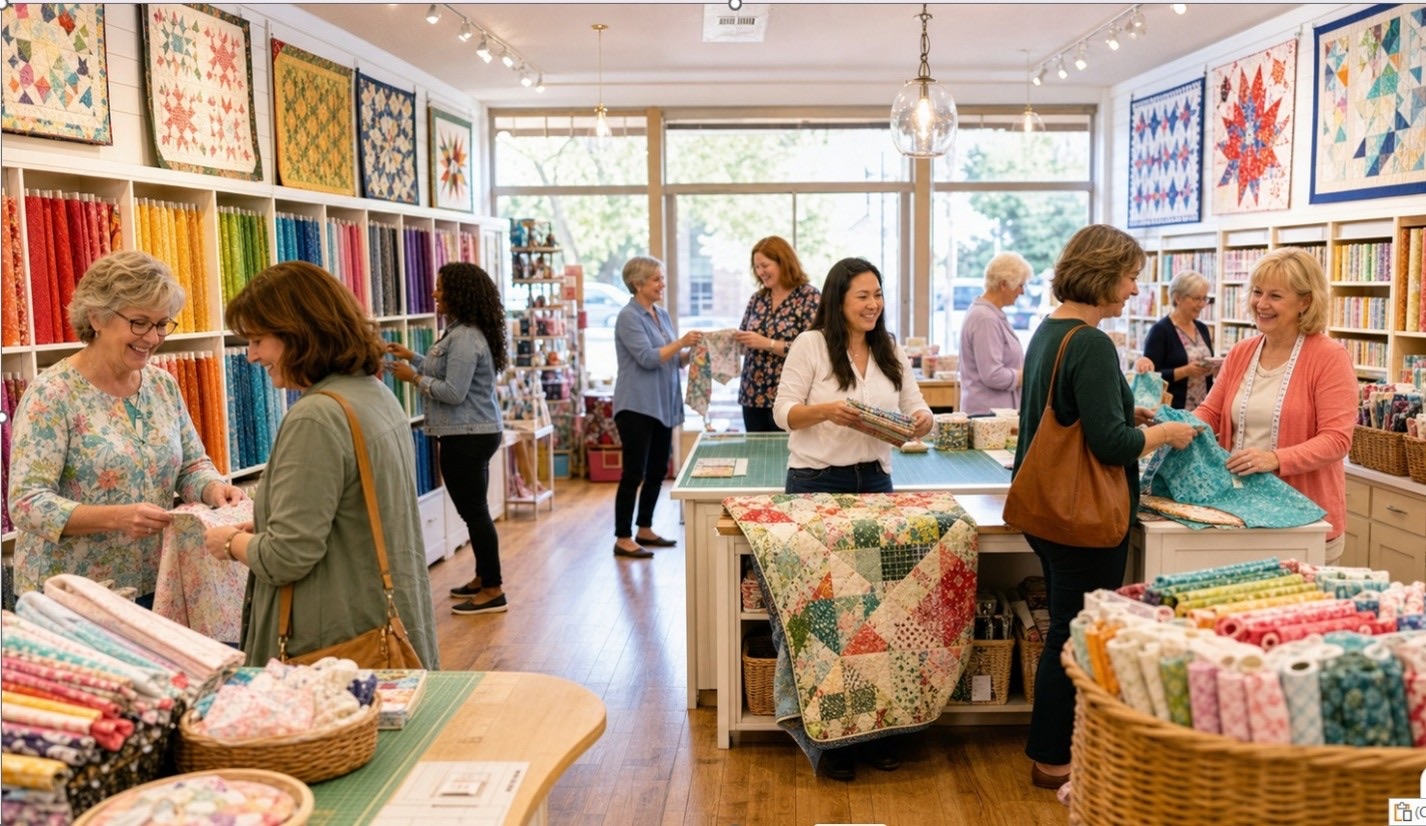
And when they’re sitting at their sewing machine at 10:47 PM, wondering how to solve a problem, I want them to remember that the people who care about their success are still there to help.
Because the greatest gift an independent retailer can receive isn’t simply another sale.
It’s another customer who becomes a friend, another friend who becomes part of the community, and another relationship that lasts a lifetime.
So, this Christmas, before you spend another dollar trying to attract a stranger, take a good look at the customers you’ve already been blessed with.
- Thank them.
- Help them.
- Surprise them.
- Give them something worth sharing.
And above all, make certain they know how much they matter.
Do those things consistently, and you may discover that the very best Christmas present your business could receive has been right in front of you all along.
A customer who wouldn’t dream of doing business anywhere else.
Merry Christmas, and here’s to a prosperous New Year for every independent retailer who believes that relationships will always matter more than transactions.
See what a 24/7 Store Assistant and the rest of the Sew Smart tools could do for your shop.
Request a Demo